
There's something especially comforting about a slow-cooker meal in autumn. The kitchen gradually fills with the aromas of herbs and vegetables, and dinner begins to take shape long before it's time to sit down.
For this recipe, I wanted to build a meal around some of my favorite fall ingredients: honeynut squash, sweet potatoes, apples, shallots, and a generous mixture of root vegetables.
I love how these ingredients change as they cook. The vegetables soften, the apples contribute a subtle sweetness, and the sage, thyme, Dijon mustard, and apple cider vinegar bring everything into a more savory balance.
The pork tenderloin adds a different consideration. Because it's a lean cut, I don't want it spending the entire day in the slow cooker. Instead, I give the vegetables a head start, briefly sear the seasoned pork, and add it later, checking its internal temperature so it can be removed when it's ready.
That approach allows the vegetables to become tender without relying on an extended cooking time for the pork.
But what made this particular dinner interesting to me was what happened beyond the slow cooker.
Rather than serving everything in its original form, I took some of the cooked vegetables and blended them with feta, Dijon, herbs, and a little apple cider vinegar to create a creamy, savory purée.
Then I spooned my Savory Cherry-Dijon Pan Sauce over the sliced pork.
The sauce began with the same neutral Slow-Cooker Cherry Master Compote I'd used to create a sweet fall breakfast variation. Here, the cherries took on an entirely different personality alongside shallot, thyme, balsamic vinegar, and Dijon.
The finished plate brought together tender pork, earthy vegetables, a softly tangy purée, and a bright cherry sauce. Each element had its own character, but I particularly enjoyed how they complemented one another.
Of course, the pork and vegetables are lovely served directly from the slow cooker, with some of the cooking juices spooned over the top. You don't need to prepare the companion recipes to enjoy this meal.
And if you have extra vegetables and broth, they can become the beginning of another dish. That's how my Harvest Root Vegetable & White Bean Soup came into the picture.
I think that's what I appreciate most about this recipe. It can be a simple, comforting dinner on its own—or the foundation for several different preparations, depending on what sounds good and how much you have available.
For me, that kind of flexibility makes cooking feel both creative and practical.
THE RECIPE
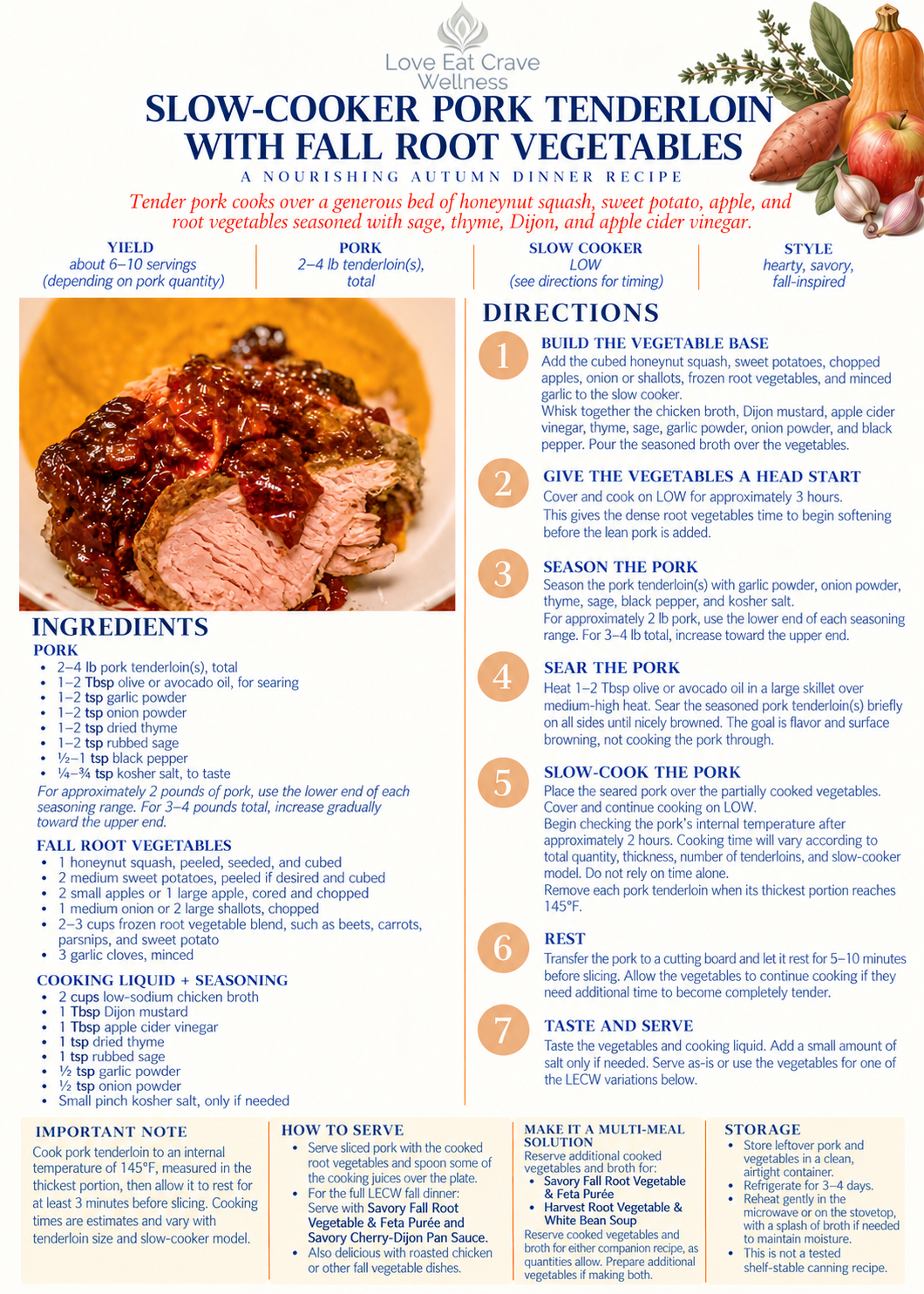
BEYOND THE RECIPEThe Art of Building a Slow-Cooker Autumn Dinner
One of the things I enjoy about cooking is understanding why certain steps make a difference.
A slow cooker can make meal preparation wonderfully convenient, but not every ingredient responds to heat in the same way. Root vegetables, apples, and lean pork each have their own characteristics, and this recipe works with those differences rather than treating everything as though it needs the same amount of time.
Why give the vegetables a head start? Dense vegetables such as sweet potatoes, squash, carrots, and parsnips need time to soften. Starting them before adding the pork allows them to begin cooking in the seasoned broth. By the time the tenderloin goes in, the vegetables are already on their way to becoming tender and flavorful.
Why add the pork later? Pork tenderloin is a relatively lean, tender cut. Unlike tougher cuts that benefit from prolonged slow cooking, tenderloin can become dry when cooked well beyond its ideal internal temperature. Adding it after the vegetables have started cooking helps us better manage the different needs of the ingredients.
What does searing contribute? Briefly browning the seasoned pork in a hot skillet creates flavorful compounds on its surface through the Maillard reaction. Searing isn't necessary to seal in juices—that's a common cooking myth—but it does add savory depth and an appealing browned exterior.
Why is a food thermometer so important? Slow cookers vary, and the time required depends on the size and thickness of the tenderloins, how much food is in the cooker, and the appliance itself. For pork tenderloin, the target is an internal temperature of 145°F in the thickest portion, followed by at least a three-minute rest. In this recipe, I allow the pork to rest for five to ten minutes before slicing. The thermometer, rather than the clock alone, tells us when the pork is ready.
What role do apples play in a savory dish? Apples contribute natural sweetness and gentle acidity. As they cook, they soften into the vegetable mixture, complementing the earthier flavors of squash and root vegetables. Alongside the herbs and Dijon, they help create a savory dish with a subtle sweetness rather than a distinctly sweet flavor.
Why combine Dijon mustard and apple cider vinegar? Root vegetables become naturally sweeter as they cook, particularly when paired with apples. Dijon adds gentle sharpness and complexity, while apple cider vinegar contributes acidity. Together, they help keep the cooking liquid and vegetables from tasting overly rich or one-dimensional.
What do sage and thyme bring to the meal? These herbs have distinct aromatic qualities that complement both pork and fall vegetables. Sage has an earthy, slightly woodsy character, while thyme brings a more delicate herbal note. Their flavors develop in the warm cooking liquid, helping connect the ingredients throughout the dish.
What makes the vegetables nutritionally interesting? The combination of squash, sweet potatoes, apples, and assorted root vegetables provides a variety of plant nutrients, including fiber, potassium, and carotenoids. Orange vegetables such as sweet potatoes and squash are particularly notable for beta-carotene, which the body can convert to vitamin A. Pork tenderloin contributes protein along with nutrients such as thiamin, vitamin B6, and selenium. Together, these ingredients offer a varied mix of nutrients as well as satisfying flavors and textures.
Why save the cooking liquid? As the vegetables and pork cook, their flavors mingle with the broth, herbs, mustard, and vinegar. That liquid can be useful beyond the original meal. A little can be spooned over sliced pork, blended into the Savory Fall Root Vegetable & Feta Purée, or incorporated into the Harvest Root Vegetable & White Bean Soup. How much you can reserve will depend on the amount left after serving dinner.
What I appreciate about this recipe is that the slow cooker provides a convenient starting point without taking away the opportunity to make thoughtful cooking decisions.
The vegetables get the time they need. The pork is cooked according to its temperature. And the flavors develop together while still leaving room for different ways to serve the finished meal.
A question to bring into your own kitchen: When you prepare a one-pot meal, which ingredients might benefit from being added at different stages rather than all at once?
MAKING IT YOUR OWNOne Slow-Cooker Dinner, Several Delicious Possibilities
One of my favorite things about this recipe is that it doesn't have to be served the same way every time.
The pork, vegetables, and seasoned cooking liquid are satisfying on their own. But they also create a foundation for other preparations, depending on how much time you have, what you're in the mood for, and what you'd like to make with any extra vegetables.
Keep dinner beautifully simple. Slice the rested pork tenderloin and serve it alongside the tender squash, sweet potatoes, apples, and root vegetables. Spoon a little of the seasoned cooking liquid over the plate. The combination of sage, thyme, Dijon, and apple cider vinegar gives the meal plenty of flavor without needing anything additional.
Create the complete LECW autumn dinner. For the plated version I especially enjoyed, serve slices of pork over Savory Fall Root Vegetable & Feta Purée, then finish with warm Savory Cherry-Dijon Pan Sauce. The purée adds a creamy, gently tangy foundation, while the cherry sauce brings brightness and contrast. Both are separate companion recipes, so you can make either one—or both—when you feel like taking dinner a little further.
Choose the vegetables you enjoy. Honeynut squash and sweet potatoes bring natural sweetness, while carrots, parsnips, and beets contribute their own earthy flavors. A frozen root vegetable blend makes the preparation more convenient. Keep the vegetable pieces reasonably similar in size so they cook more evenly, and remember that particularly dense vegetables may need additional time.
Adjust the savory balance at the table. Before serving, taste the cooked vegetables and broth. A little additional black pepper, fresh thyme, or a small splash of apple cider vinegar can brighten the flavors. Because the broth, Dijon, and seasonings already contribute salt, taste before adding more.
Save vegetables for a creamy purée. If you have enough cooked vegetables to spare, blend a portion with feta, Dijon, herbs, and a little reserved broth to make Savory Fall Root Vegetable & Feta Purée. It's a lovely way to give familiar ingredients an entirely different texture.
Turn extra vegetables into soup. The Harvest Root Vegetable & White Bean Soup uses cooked fall vegetables and broth as its starting point, then adds cannellini beans and additional seasonings. The result is a separate, comforting meal that makes good use of ingredients you've already prepared.
Plan your portions before cooking. If you hope to make both the purée and the soup, consider preparing extra vegetables. The two companion recipes require generous amounts, and a single batch of pork and vegetables may not provide enough for dinner and both variations.
Store leftovers with another meal in mind. Refrigerate leftover pork and vegetables promptly in airtight containers and use within three to four days. Reheat gently with a splash of reserved broth to help maintain moisture. You can also portion extra cooked vegetables and broth separately if you plan to use them in another recipe.
What I enjoy most about this approach is that it doesn't require turning every dinner into a complicated project.
Some evenings, the pork and vegetables are all I want. Other times, I enjoy creating the full plate with the purée and cherry sauce. And when there are enough vegetables left, I like knowing another meal is already partly underway.
It's a flexible way to cook that leaves room for both simplicity and creativity.
CONTINUE EXPLORINGOne Autumn Dinner, Four Ways to Keep Creating
What I love about this slow-cooker meal is how the different ingredients can lead to something new.
The pork and fall vegetables make a comforting dinner on their own. But the vegetables, cooking broth, and a simple cherry compote also inspired several other recipes in my kitchen.
If you'd like to explore those connections, here are four places to begin.
Savory Cherry-Dijon Pan Sauce — A bright, savory sauce made from the neutral Slow-Cooker Cherry Master Compote, with shallot, Dijon mustard, balsamic vinegar, and thyme. Spoon it over sliced pork for a lovely contrast to the earthy fall vegetables.
Savory Fall Root Vegetable & Feta Purée — Cooked squash, sweet potatoes, and root vegetables blended with feta, Dijon, herbs, and a touch of apple cider vinegar until creamy and spoonable. This is the foundation I used beneath the pork and cherry sauce in the finished dinner.
Harvest Root Vegetable & White Bean Soup — A comforting way to give cooked fall vegetables another purpose. Cannellini beans, broth, aromatics, and herbs turn the vegetable mixture into a creamy, satisfying soup with its own distinct character. It's a wonderful option when you've prepared enough vegetables to set some aside.
Slow-Cooker Cherry Master Compote — The simple cherry preparation that inspired the savory pan sauce. Made with cherries, citrus, and allulose, this neutral compote can become either a sweet breakfast addition or the starting point for a savory dinner sauce.
You don't need to make all of these recipes at once.
Sometimes the most enjoyable approach is to serve a simple dinner, save what you can, and decide later what those ingredients might become.
For me, that's one of the pleasures of cooking seasonally: familiar ingredients can take on entirely different personalities with just a few thoughtful additions.
