
There's something I love about a recipe that leads naturally to another idea. Sometimes the most interesting part of cooking isn't the original meal, but noticing what else those ingredients could become.
That's how this Harvest Root Vegetable & White Bean Soup came together.
When I made my Slow-Cooker Pork Tenderloin with Fall Root Vegetables, I started with honeynut squash, sweet potatoes, apples, shallots, and a mixture of other root vegetables. As everything cooked with broth, sage, thyme, Dijon mustard, and apple cider vinegar, the vegetables softened and developed a savory depth alongside their natural sweetness.
Some of those cooked vegetables became the foundation for my Savory Fall Root Vegetable & Feta Purée. But I also wanted to explore a different direction—something warm, spoonable, and substantial enough to feel like a meal on its own.
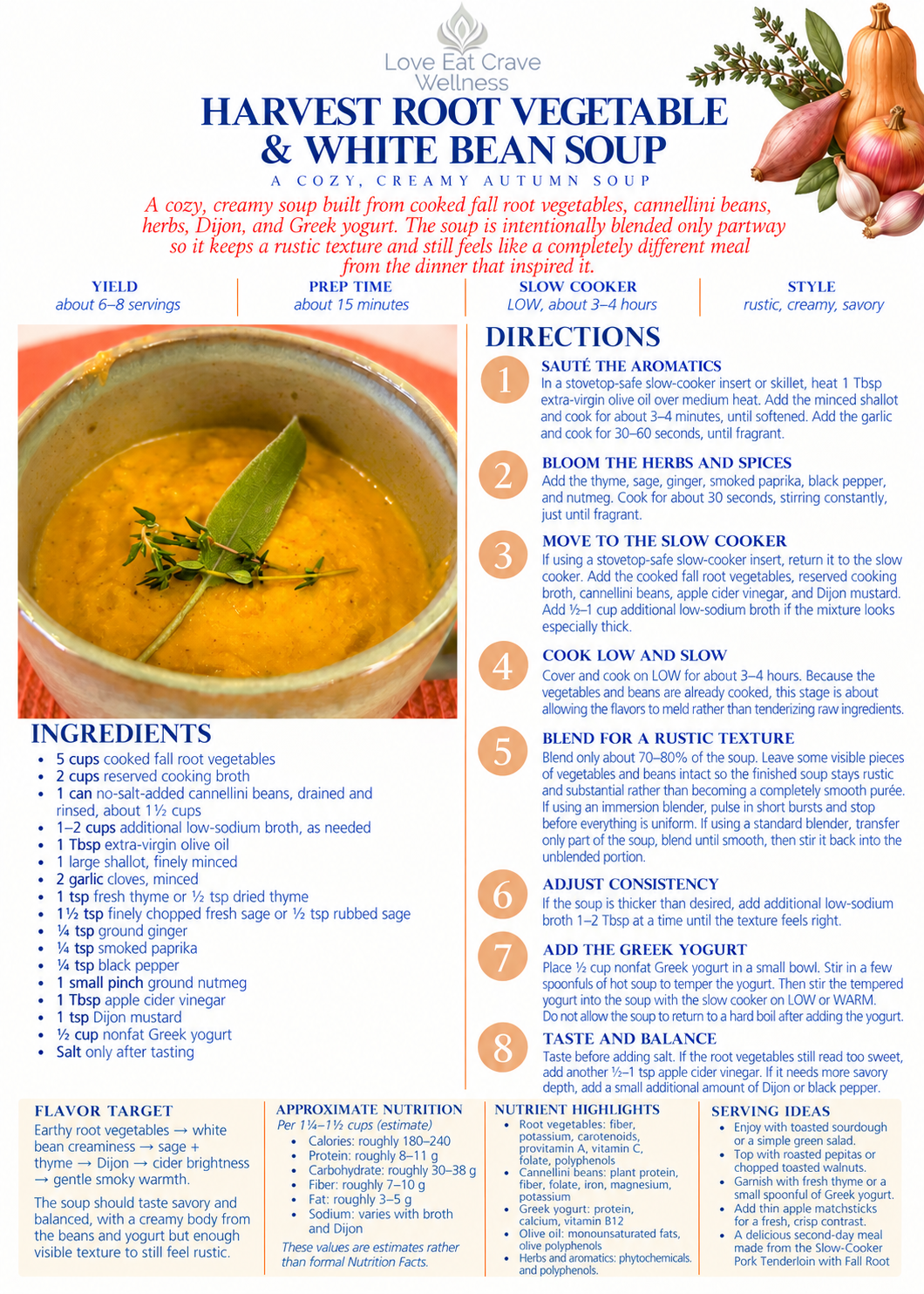
For this soup, I combined cooked fall vegetables with cannellini beans, additional broth, shallot, garlic, and herbs. A little ginger and smoked paprika add warmth without overpowering the vegetables, while Dijon and apple cider vinegar help balance their sweetness.
The texture was especially important to me. I didn't want a completely smooth, blended soup. Instead, I blended most of it while leaving some vegetables and beans intact, creating a creamy base with enough texture to make each spoonful interesting. A little Greek yogurt, stirred in gently at the end, brings everything together.
What I appreciate most about this recipe is that it doesn't feel like a repeat of the original dinner. It uses familiar ingredients, but the experience is entirely different.
And that's one of my favorite things about cooking: a little curiosity can turn what you already have into something worth looking forward to.
THE RECIPE
BEYOND THE RECIPEA Little More Than a Bowl of Soup
What makes this soup interesting to me isn't simply that it contains root vegetables and white beans. It's how the ingredients work together to create something creamy, savory, and substantial without losing the character of the vegetables themselves.
The beans do more than add substance. Cannellini beans bring plant-based protein, fiber, and a naturally creamy texture. When some of the beans are blended with the vegetables, they help give the broth body. Leaving a portion intact creates a different experience—one with a little more texture and something to discover in each spoonful.
Root vegetables bring more than sweetness. Squash, sweet potatoes, carrots, parsnips, and other fall vegetables contribute different flavors, textures, and nutrients. Depending on the vegetables used, the mixture can provide fiber, potassium, and a range of naturally occurring plant compounds, including carotenoids. Their sweetness is part of what makes this soup comforting, but it's also why the savory ingredients matter.
Aromatics help create depth. Shallot, garlic, sage, thyme, ginger, and smoked paprika each contribute something different. Some are fragrant, some earthy, and some gently warming. Together, they give the soup layers of flavor without requiring any one ingredient to dominate. Herbs and aromatics also contain naturally occurring phytochemicals, although their amounts vary with the ingredients and portions used.
Acidity changes how we experience sweetness. A little apple cider vinegar and Dijon mustard bring brightness and tang to the naturally sweet vegetables. Neither needs to be especially noticeable on its own. Instead, they help the soup taste more balanced and savory. This is one of my favorite things to experiment with in the kitchen: sometimes a dish doesn't need more salt or more seasoning—it needs a different kind of contrast.
Creaminess doesn't have to mean blending everything. Blending approximately 70–80% of the soup creates a smooth base while leaving some vegetables and beans recognizable. The Greek yogurt adds another layer of creaminess and a little protein, but it's stirred in gently rather than boiled. The result is a soup that feels both rustic and silky.
The bigger idea is flexibility. This recipe began with vegetables cooked for another meal, but it doesn't depend on having leftovers. You can intentionally prepare extra vegetables or start with a separate batch. What matters is recognizing that a familiar combination of ingredients can become something entirely new with a change in preparation, texture, and seasoning.
And that leaves me with a question I find myself returning to often: What might change in your cooking if you began thinking of ingredients not as belonging to one recipe, but as possibilities for several?
MAKING IT YOUR OWNA Soup That Leaves Room for Your Preferences
One of the things I appreciate about this soup is how adaptable it is. The combination of root vegetables, white beans, broth, and herbs provides a starting point, but there are several ways to adjust the flavor and texture depending on what you have and what sounds good.
Choose your own vegetable combination. Honeynut squash, butternut squash, sweet potatoes, carrots, and parsnips can all work beautifully here. You can use vegetables reserved from the Slow-Cooker Pork Tenderloin with Fall Root Vegetables or cook a separate batch specifically for the soup. Because different vegetables bring different levels of sweetness and moisture, taste and adjust the finished soup rather than expecting every batch to be identical.
Decide how rustic you want it. The original recipe blends approximately 70–80% of the soup, leaving some beans and vegetables intact. For a chunkier version, blend a little less. If you prefer a smoother soup, blend more, keeping in mind that the texture will become less rustic. An immersion blender makes it especially easy to stop when the consistency feels right.
Adjust the broth gradually. Root vegetables can absorb and release different amounts of liquid depending on how they were cooked. Begin with the broth called for in the recipe, then add more in small amounts until the soup is as thick or spoonable as you like. Remember that blending the beans will also change the consistency.
Experiment with the beans. Cannellini beans are especially nice because of their mild flavor and creamy texture. Great Northern beans are another option. If using a different bean, expect some variation in flavor, texture, and the finished soup's nutritional profile.
Find your preferred savory balance. If the vegetables taste particularly sweet, a little additional apple cider vinegar can bring brightness. For more savory depth, try a small adjustment of Dijon mustard or black pepper. Make changes gradually and taste between additions. The goal isn't to cover up the vegetables, but to help their flavors work together.
Finish with something contrasting. Toasted pepitas or chopped walnuts add crunch. Fresh thyme brings a fragrant finishing note, while a small spoonful of Greek yogurt adds a cool, creamy contrast. Thin apple matchsticks can be lovely when you want a little freshness against the warm, earthy soup.
Make it part of a different meal. Serve the soup with toasted sourdough, a simple green salad, or another accompaniment you enjoy. It can be a light meal on its own or one part of a larger dinner.
I think recipes become more useful when we understand which elements are essential and which ones invite experimentation. With this soup, the cooked vegetables and beans provide the foundation. The texture, seasoning, and finishing touches are where you can make it distinctly your own.
CONTINUE EXPLORINGFrom One Autumn Dinner to a Collection of Possibilities
This soup grew out of a simple idea: the ingredients we prepare for one meal can inspire something entirely different. These connected recipes explore how fall vegetables, savory herbs, and a few thoughtfully chosen additions can take on new flavors and textures.
Slow-Cooker Pork Tenderloin with Fall Root Vegetables
The dinner that started this part of the collection. Tender pork cooks alongside squash, sweet potatoes, apples, shallots, and root vegetables. Prepare extra vegetables if you'd like to reserve some specifically for this soup.
Savory Fall Root Vegetable & Feta Purée
Another way to transform cooked fall vegetables. Blended with feta, Dijon, herbs, and a little reserved broth, the vegetables become a silky, savory accompaniment to roasted meats or a meal built around vegetables.
A savory cherry sauce layered with shallot, Dijon mustard, balsamic vinegar, and thyme. It brings a bright, richly flavored finish to the pork tenderloin and demonstrates another way this fall collection builds from one recipe to the next.
Slow-Cooker Cherry Master Compote
A versatile cherry foundation with citrus and a touch of allulose. Its neutral flavor makes it a starting point for both sweet preparations and savory recipes like the Cherry-Dijon Pan Sauce.
