
There's something satisfying about discovering that an ingredient can play more than one role in a meal.
When I made my Slow-Cooker Pork Tenderloin with Fall Root Vegetables, I loved the vegetables just as they were—softened by slow cooking, infused with sage and thyme, and gently sweet from the squash, sweet potatoes, and apples. But I also wanted to explore what would happen if I changed their texture entirely.
That became this Savory Fall Root Vegetable & Feta Purée.
I reserved a portion of the cooked vegetables and their flavorful broth, then blended them with a little feta, Dijon mustard, apple cider vinegar, and herbs. The result was silky and spoonable, with enough savory tang to balance the vegetables' natural sweetness.
The feta is intentionally subtle. I didn't want a purée that tasted primarily of cheese; I wanted the vegetables to remain recognizable, with the feta adding just enough contrast to make the flavors feel more complete.
For the original fall dinner, I spooned the purée onto the plate first, layered sliced pork tenderloin over it, and finished everything with my Savory Cherry-Dijon Pan Sauce. The creamy vegetables caught some of the sauce, bringing the sweet, savory, and tangy elements together in each bite.
What I especially love about this recipe is that it doesn't require an entirely new set of ingredients. It's a different expression of vegetables that have already been cooked and seasoned.
Sometimes making a meal feel new is less about adding more—and more about seeing what's already there differently.
THE RECIPE
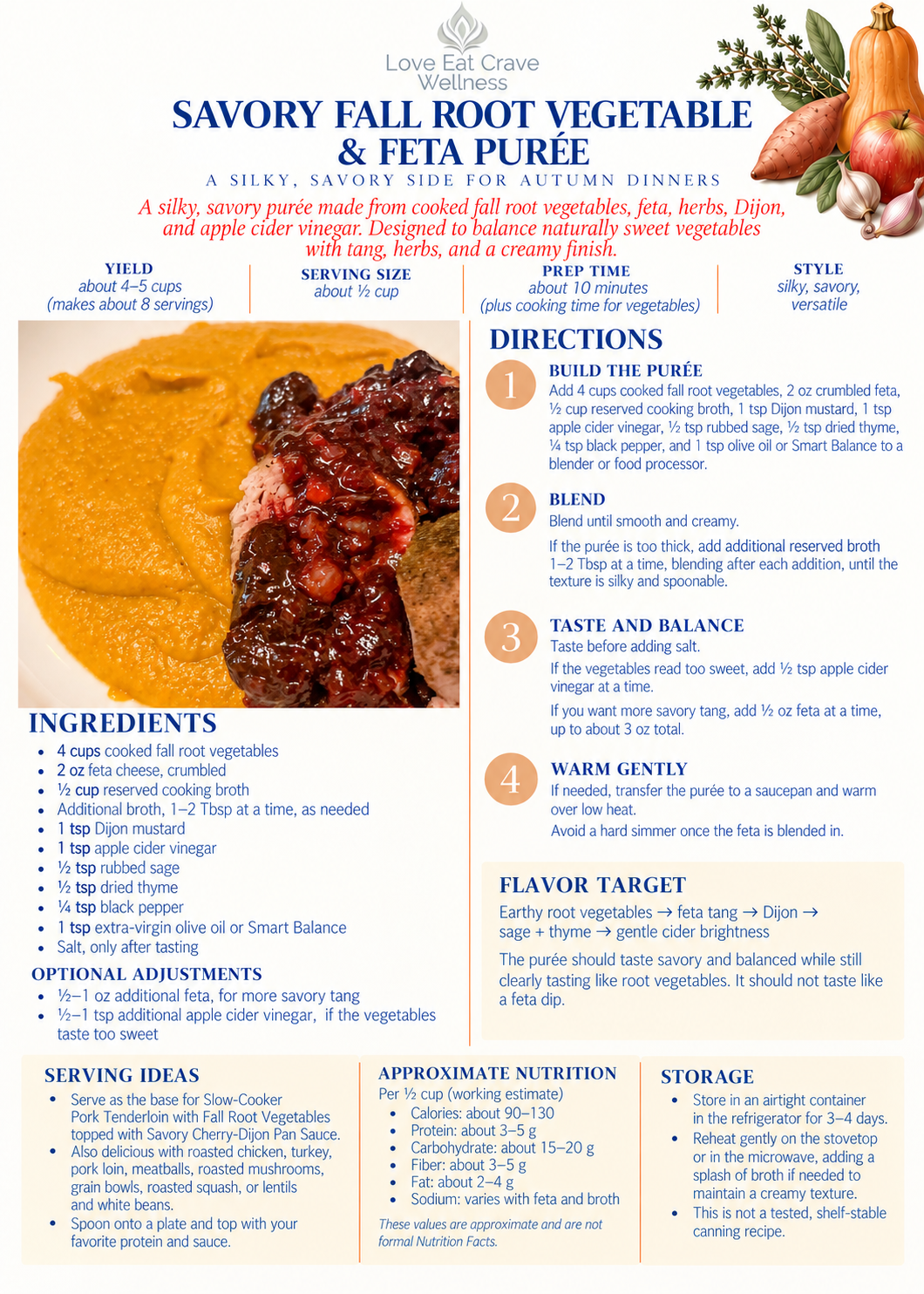
BEYOND THE RECIPEA Different Texture, A Different Experience
One of the things I find most interesting about cooking is how much texture influences the way we experience food.
The fall vegetables in this recipe have already spent time in the slow cooker, absorbing the flavors of herbs, broth, and aromatics. Served as they are, they make a comforting, rustic side dish. But when those same vegetables are blended into a smooth purée, they take on an entirely different role.
Texture changes how a dish comes together. A silky purée becomes a foundation rather than simply another item on the plate. It can hold sliced pork, catch a spoonful of sauce, or add creaminess alongside roasted vegetables and beans. The ingredients haven't changed dramatically, but the eating experience has.
Feta creates contrast without taking over. Squash, sweet potatoes, carrots, and apples can develop a pronounced sweetness as they cook. A modest amount of feta contributes saltiness, tang, and creaminess, helping bring the purée into more savory territory. The intention isn't to make a feta-flavored dip; it's to let the vegetables remain the main flavor.
Dijon and apple cider vinegar bring balance. Dijon adds a little savory sharpness, while cider vinegar introduces acidity that helps counter the vegetables' sweetness. This becomes particularly useful when serving the purée with a fruit-based sauce, such as the Savory Cherry-Dijon Pan Sauce. Rather than competing, the creamy vegetables and bright sauce can complement each other.
Seasoning is best approached with curiosity. The cooked vegetables and broth already contain seasoning, and feta contributes additional salt. That's why I prefer to blend everything first, taste, and only then decide whether more salt, vinegar, or feta is needed. The goal isn't to follow a rigid formula for flavor; it's to notice what the dish needs.
Repurposing can be intentional rather than repetitive. Using vegetables from one preparation to create another doesn't have to feel like serving the same leftovers again. A change in texture, a few balancing ingredients, and a different place on the plate can give familiar foods a new purpose.
And that raises a question I love bringing into the kitchen: What ingredients are already in your refrigerator that might become something entirely different with a change in texture or a small adjustment in flavor?
MAKING IT YOUR OWNSmall Adjustments, Different Possibilities
One of the things I appreciate about this purée is its flexibility. Because the vegetables are already cooked, most of the work is simply deciding what texture and flavor will work best for the meal you're creating.
Start with the vegetables you have. The original version uses cooked fall vegetables reserved from my Slow-Cooker Pork Tenderloin with Fall Root Vegetables. You can also prepare vegetables separately for this recipe. Squash, sweet potatoes, carrots, and parsnips are natural starting points. The exact combination will influence the sweetness, color, and thickness of the finished purée, so taste and adjust as you go.
Make the texture your own. Begin with the ½ cup of reserved cooking broth called for in the recipe. For a thicker purée that holds its shape beneath sliced meat or roasted vegetables, stop blending once it's smooth and spoonable. If you'd prefer something softer, add more broth 1–2 tablespoons at a time. Small additions make it easier to find the consistency you want without thinning it too much.
Adjust the savory tang gradually. The recipe begins with 2 ounces of feta so the vegetables remain the dominant flavor. If you'd like a little more tang, add another ½ ounce at a time, up to approximately 3 ounces total. If the vegetables taste particularly sweet, try an additional ½ teaspoon of apple cider vinegar before reaching for more salt.
Think beyond the original pork dinner. This purée is lovely beneath roasted chicken, turkey, pork loin, or meatballs. For a plant-forward plate, try it with roasted mushrooms, lentils, or white beans. It can also add a creamy element to a grain bowl without needing a separate sauce.
Prepare extra vegetables with a purpose. If you're making the slow-cooker pork dinner and want to create this purée afterward, plan to reserve 4 cups of cooked vegetables along with some cooking broth. If you're also planning to make the Harvest Root Vegetable & White Bean Soup, you may need to cook additional vegetables; one batch of the pork dinner isn't guaranteed to provide enough for both recipes.
Warm it gently before serving. If the purée has cooled, reheat it over low heat, adding a splash of broth if needed to restore its creamy texture. Avoid a hard simmer once the feta has been blended in.
The beauty of this recipe is that the adjustments are small, but the possibilities are surprisingly varied. A little more broth, a touch more acidity, or a different pairing can make the same purée feel right at home in an entirely new meal.
CONTINUE EXPLORINGOne Fall Dinner, Several Delicious Possibilities
This purée is part of a connected collection of recipes built around fall vegetables, slow cooking, and finding new ways to use familiar ingredients. Explore how each recipe contributes something different to the table.
Slow-Cooker Pork Tenderloin with Fall Root Vegetables
The original slow-cooker dinner that inspired this purée. Tender pork, squash, sweet potatoes, apples, and root vegetables create a comforting autumn meal—and provide the cooked vegetables and broth used here.
A richly flavored sauce with cherries, shallot, Dijon, balsamic vinegar, and thyme. Spoon it over sliced pork and this creamy purée to bring the complete fall dinner together.
Slow-Cooker Cherry Master Compote
A versatile cherry foundation with bright citrus notes and a touch of allulose. This neutral compote becomes the starting point for the savory Cherry-Dijon Pan Sauce and other sweet or savory variations.
Harvest Root Vegetable & White Bean Soup
A cozy, creamy soup made with cooked fall vegetables, cannellini beans, herbs, and Greek yogurt. Another way to transform familiar ingredients into a satisfying meal with a completely different texture.
