
There's something satisfying about discovering that an ingredient you prepared for one purpose can become something entirely different.
When I made my Slow-Cooker Cherry Master Compote, I already had two ideas in mind.
One portion would become a warmly spiced cherry filling for my Fall Cherry Cream Oatmeal Bake. The other would take a savory turn, becoming a sauce for pork tenderloin and fall root vegetables.
I was especially curious about that second possibility.
Cherries have a natural richness and a balance of sweetness and tartness that I thought would work beautifully alongside the earthy flavors of an autumn dinner. But I didn't want a sauce that tasted like cherry preserves spooned over meat. I wanted something with savory depth, a little tang, and enough complexity to bring the whole plate together.
So I started with the neutral compote and built from there.
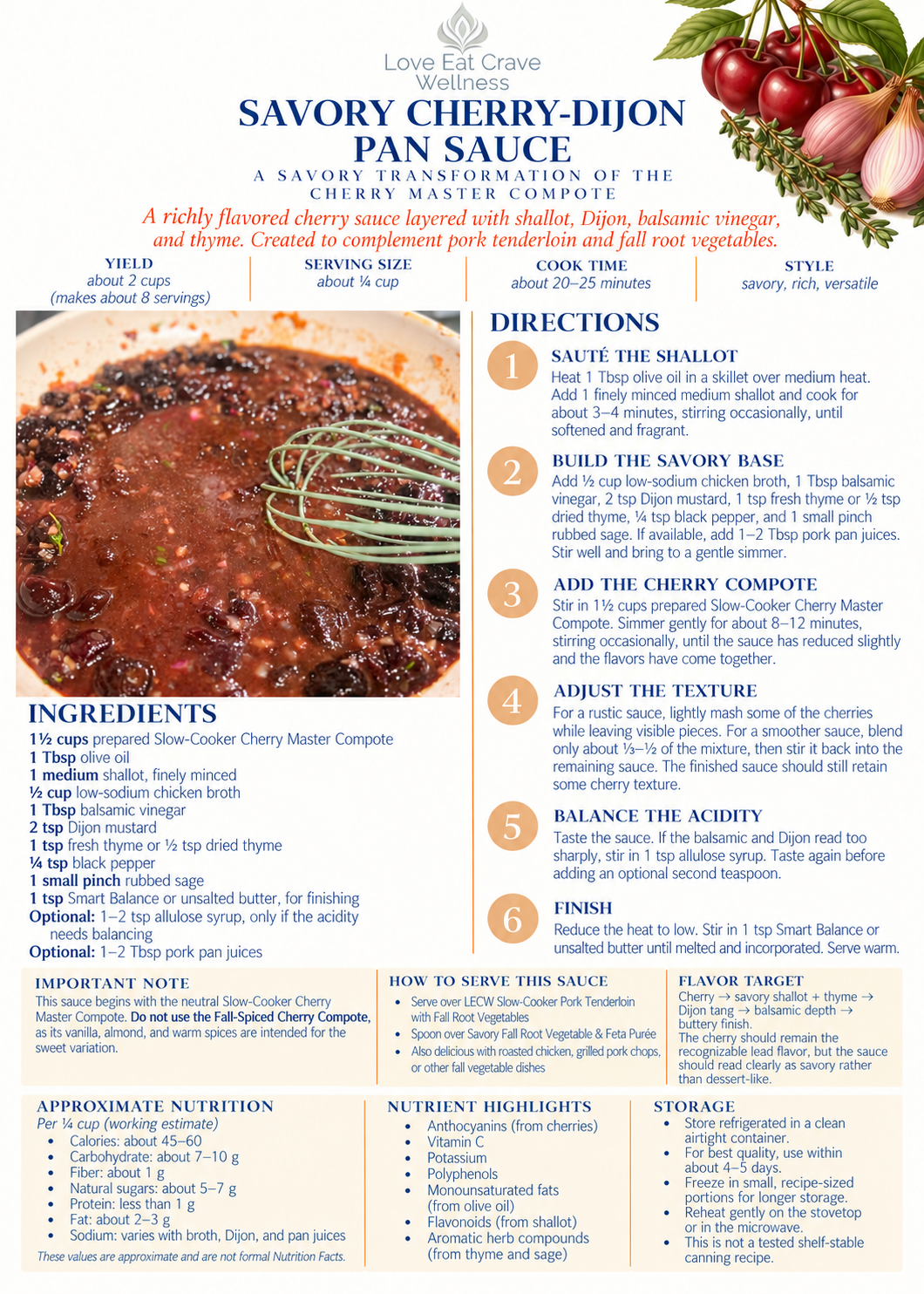
Shallot and thyme brought an aromatic, savory foundation. Dijon mustard added a gentle sharpness, while balsamic vinegar contributed acidity and depth. A little broth helped bring everything together as the sauce simmered, and a small amount of butter at the end rounded out the flavors.
The cherries remained recognizable, which was important to me. I wanted the sauce to have texture and character rather than become a completely smooth glaze.
What emerged was a combination I particularly enjoyed: rich cherry flavor balanced by savory herbs, Dijon, and balsamic.
I served it with sliced slow-cooker pork tenderloin over a creamy purée made from the fall root vegetables that had cooked alongside the pork. The purée offered an earthy, softly tangy foundation, while the cherry sauce brought brightness and contrast.
It was one of those meals where each component was delicious on its own, but the combination made the dinner feel especially thoughtful.
And I loved knowing that the cherries in this sauce began in the very same slow cooker batch as the ones I used for breakfast.
You don't have to prepare the entire pork dinner to enjoy this sauce, of course. It could also be lovely with roasted chicken, grilled pork chops, or other savory dishes that welcome a little fruit and acidity.
But if you're making the complete LECW autumn dinner, this is the finishing element that brings the different flavors together.
For me, that's the pleasure of cooking with a versatile foundation. One simple preparation can lead to recipes that feel entirely distinct, depending on what you choose to add next.
And sometimes a pot of cherries turns out to be just as interesting at dinner as it is at breakfast.
THE RECIPE
BEYOND THE RECIPEWhen Cherries Take a Savory Turn
I find it fascinating how an ingredient we often associate with something sweet can become equally compelling in a savory dish.
Cherries are a wonderful example. Their natural sweetness, acidity, and deep fruit flavor create opportunities that go well beyond desserts and breakfast toppings.
In this sauce, the cherries are still the star. But the ingredients surrounding them change how we experience their flavor.
Why do cherries work with savory foods? Cherries bring both sweetness and tartness, creating contrast with rich proteins and earthy vegetables. Paired with pork, their fruitiness adds brightness without needing to dominate the plate. The goal isn't to hide the cherries—it's to give them a different context.
What does Dijon mustard contribute? Dijon adds acidity, gentle sharpness, and savory complexity. Its mustard flavor helps bridge the fruit and the herbs, making the sauce feel more integrated with the rest of the meal rather than like a sweet topping added at the end.
Why add balsamic vinegar? Balsamic contributes acidity along with its own rounded, slightly sweet flavor. That combination complements the cherries while creating a deeper contrast with the shallot, thyme, and sage. Because both the vinegar and Dijon bring sharpness, tasting before adding any optional sweetener is especially important.
What happens during reduction? As the sauce simmers, some of its water evaporates, concentrating the flavors and creating a thicker consistency. The cherries soften further, and the broth, mustard, vinegar, and aromatics become more cohesive. A gentle simmer gives the sauce time to develop without aggressively cooking away the fruit's texture.
Why leave some cherry pieces intact? Texture changes the experience of a sauce. Keeping recognizable cherries creates little bursts of fruit alongside the savory base. For a slightly smoother consistency, part of the sauce can be blended and stirred back in, but I prefer leaving enough fruit visible to remind us where the sauce began.
What does the finishing butter do? A small amount of butter or Smart Balance stirred in at the end contributes richness and a more rounded mouthfeel. It softens the sharper edges of the Dijon and balsamic without taking away the brightness that makes the sauce interesting.
What nutritional qualities do cherries bring? Cherries contain fiber, potassium, and naturally occurring polyphenols, including anthocyanins, which contribute to their deep red color. Shallots and herbs contribute additional plant compounds. These ingredients offer nutritional interest, but the reason I enjoy this combination is equally culinary: the flavors work together in a way that makes the meal more satisfying.
For me, this recipe is a reminder that sweet and savory aren't always separate categories.
Sometimes the most interesting flavors happen where they overlap.
And by starting with a neutral Cherry Master Compote, I can explore that overlap without needing to prepare an entirely new fruit recipe from scratch.
A question to bring into your own kitchen: Is there a fruit you usually reserve for breakfast or dessert that might be worth exploring in a savory dish?
MAKING IT YOUR OWNA Little Cherry Sauce, So Many Possibilities
Although I originally created this sauce for my slow-cooker pork tenderloin and fall root vegetable dinner, I love that it can bring something unexpected to other meals, too.
The combination of cherries, Dijon, balsamic, and herbs offers enough flexibility to complement different proteins and vegetables, while still having a recognizable character of its own.
Make the original autumn dinner. Spoon the warm Cherry-Dijon sauce over sliced Slow-Cooker Pork Tenderloin served on a bed of Savory Fall Root Vegetable & Feta Purée. The earthy vegetables, tender pork, and bright cherry sauce create a lovely contrast of flavors and textures.
Try it with roasted chicken. The savory herbs and gentle acidity make this sauce an interesting accompaniment to roasted chicken breast or thighs. Serve it alongside roasted squash, carrots, or another favorite seasonal vegetable.
Pair it with grilled pork chops. You don't need to prepare a slow-cooker meal to enjoy this combination. A simply seasoned pork chop gives the cherries and Dijon room to shine.
Adjust the texture to suit the dish. For a more rustic sauce, leave the cherries mostly intact. If you'd prefer something smoother for drizzling, blend a small portion and stir it back into the pan. Either way, keeping some recognizable cherry pieces adds character.
Find your preferred balance of sweet and tangy. Cherries vary in sweetness, and balsamic vinegar and Dijon can differ in intensity. Taste the finished sauce before deciding whether it needs the optional allulose syrup. Sometimes the natural sweetness of the compote is enough.
Use the neutral master compote. This distinction matters. The Savory Cherry-Dijon Pan Sauce begins with the Slow-Cooker Cherry Master Compote, before any vanilla, almond extract, or fall baking spices have been added. If you plan to make both sweet and savory cherry recipes, reserve the portion for this sauce first.
Prepare a little ahead. The neutral master compote can be made in advance, leaving only the savory sauce preparation for the day you're serving it. Refrigerate the finished sauce promptly in an airtight container, or freeze recipe-sized portions for later. Reheat gently, stirring as needed to restore its consistency.
What appeals to me most is that this sauce can make a familiar meal feel a little different without requiring an entirely new approach to cooking.
Sometimes all it takes is one thoughtfully prepared finishing element to bring a plate together.
And in this case, that finishing element happens to begin with cherries.
CONTINUE EXPLORINGFrom a Simple Cherry Compote to an Autumn Dinner
One of my favorite things about this sauce is that it belongs to a larger story in my kitchen.
It began with a simple batch of slow-cooked cherries, then became the finishing touch for a dinner built around tender pork, fall root vegetables, and a creamy, savory purée.
If you're curious about how these recipes fit together, here's where to explore next.
Slow-Cooker Cherry Master Compote — The foundation for this sauce. Cherries, citrus, and a touch of allulose are cooked gently until tender, creating a versatile preparation that can move in either a sweet or savory direction. Be sure to use the neutral master recipe rather than its Fall-Spiced variation.
Slow-Cooker Pork Tenderloin with Fall Root Vegetables — A comforting autumn main dish featuring tender pork, squash, sweet potatoes, apples, and root vegetables with sage, thyme, and Dijon. This is the original dinner I created the Cherry-Dijon sauce to accompany.
Savory Fall Root Vegetable & Feta Purée — Cooked fall vegetables blended with feta, Dijon, herbs, and apple cider vinegar until smooth and spoonable. It creates a creamy foundation for sliced pork, with the Cherry-Dijon sauce adding a bright, savory-fruity finish.
Together, these three preparations create a layered dinner, but each recipe is useful on its own.
That's what I enjoy about building meals this way: a few thoughtfully prepared components can become something special together while remaining versatile enough for another day.
