
Some of my favorite recipes begin with the idea that a familiar ingredient might have something new to offer.
Pears are a lovely example. They're delicate, fragrant, and naturally sweet, but they also have a gentle flavor that can be easy to overlook when paired with stronger ingredients.
I wanted to create something that would let the pear remain recognizable while adding a little more depth and complexity.
That's where figs came in.
Dried figs bring a rich, almost jammy quality that complements the softer character of ripe pears. As they cook together, the pears become tender and release their juices, while the figs soften and contribute body to the mixture.
For the aromatics, I took a slightly different direction from the cinnamon-forward flavors we often associate with fall.
Cardamom became the defining spice.
I love its fragrant, floral character and the subtle citrus-like notes it brings to fruit. A split vanilla bean adds softness, fresh ginger contributes a gentle warmth, and orange zest and juice introduce brightness.
The slow cooker does much of the work here. Over several hours, the fruit softens and the flavors gradually come together, creating a compote that feels layered without requiring much hands-on attention.
One of the things I particularly enjoy about the finished recipe is that it remains slightly tart.
That was intentional.
Rather than making something overwhelmingly sweet, I wanted a compote that could move comfortably between breakfast, snacks, and savory dishes.
It's lovely spooned over oatmeal or yogurt, spread onto sourdough toast, or paired with creamy goat cheese or ricotta. I can also imagine it alongside roasted chicken or pork, where the fruit and gentle acidity bring an interesting contrast.
What I enjoy most is that the recipe doesn't rely on an elaborate combination of ingredients.
Just ripe pears, rich figs, a few carefully chosen aromatics, and enough time for everything to come together.
Sometimes allowing a familiar ingredient to take the lead is what makes a recipe feel new again.
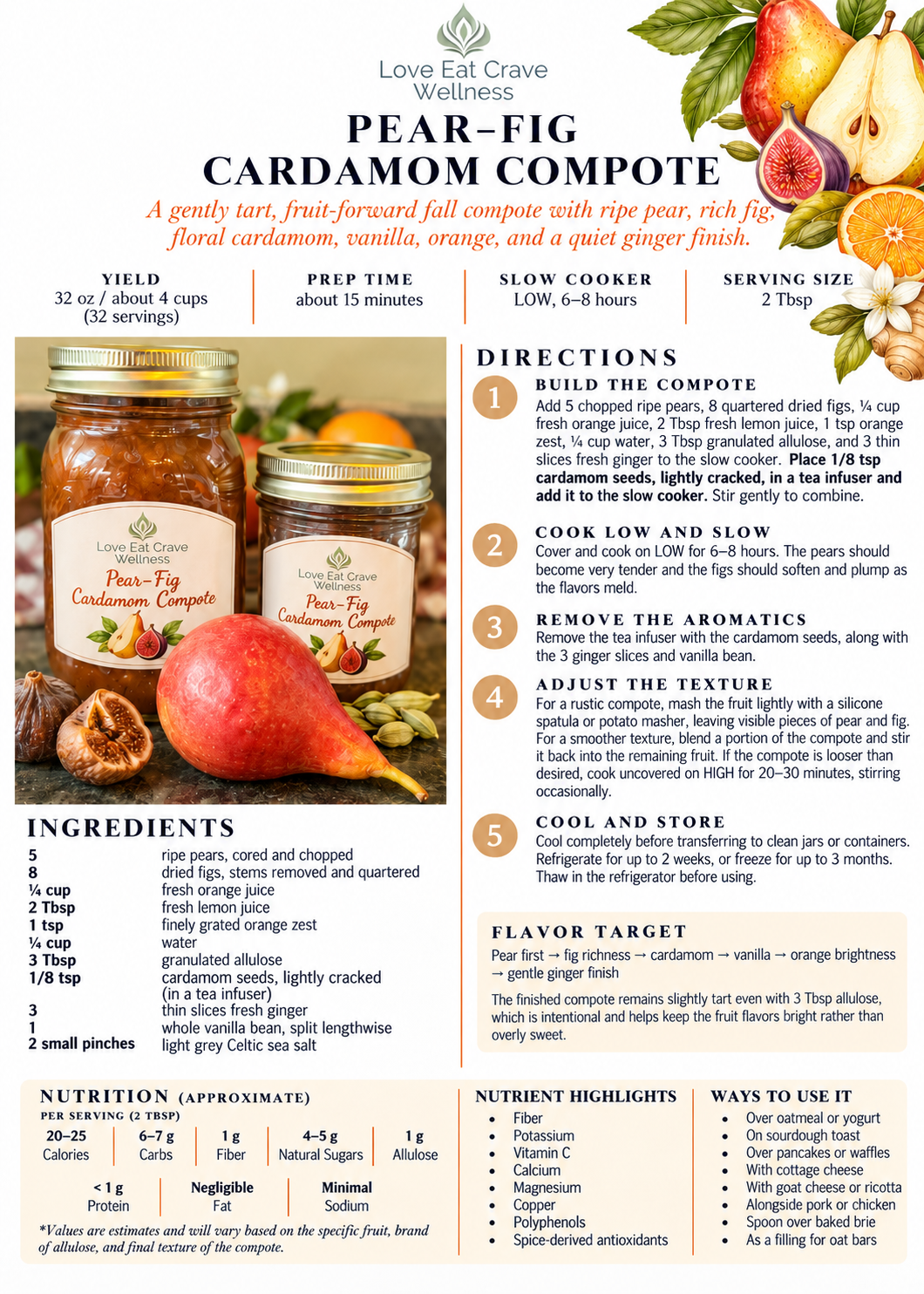
THE RECIPE
BEYOND THE RECIPEA Little Curiosity About Fruit, Flavor, and Time
One of the things I find fascinating about cooking with fruit is how much its character can change with a little heat and time.
A fresh pear is crisp or tender depending on its variety and ripeness, with a delicate sweetness and gentle floral aroma. But give that same pear several hours in a slow cooker, and it becomes something quite different.
This Pear–Fig Cardamom Compote is a lovely example of how those changes can create depth without requiring a long list of ingredients.
Pears and figs bring different qualities to the mixture. Pears contribute moisture, a soft texture, and a delicate fruit flavor. Dried figs are denser, richer, and naturally jammy. As the pears soften and release their juices, the figs absorb some of that moisture and become plump and tender. Together, they create a compote with more body and complexity than either fruit might provide alone.
Cardamom changes the direction of the flavor. Cinnamon and clove are familiar companions to fall fruit, but I intentionally left them out of this recipe. Cardamom has a fragrant, floral character with subtle citrus-like notes that complement both pears and figs. It gives the compote a distinctive aroma without overwhelming the fruit.
Vanilla, ginger, and citrus each contribute something different. Vanilla brings a soft, rounded fragrance, while fresh ginger introduces a gentle warmth. Orange juice and zest add bright citrus notes, and lemon juice contributes acidity that keeps the finished flavor lively. These ingredients don't need to stand out individually to make a difference.
A little tartness creates versatility. The finished compote remains slightly tart even with the addition of allulose, and that's intentional. The acidity helps balance the fruit's natural sweetness, making the compote just as interesting alongside creamy cheese or savory dishes as it is spooned over breakfast.
Slow cooking changes both texture and flavor. Over six to eight hours on LOW, the pears become very tender and the dried figs soften as the ingredients cook together. The result develops gradually, allowing the fruit and aromatics to become a cohesive mixture without requiring constant attention.
There's a nutritional dimension to this combination, too.
Pears and figs contribute dietary fiber and naturally occurring plant compounds, including polyphenols. They also contain minerals such as potassium, while figs contribute smaller amounts of calcium, magnesium, and copper. Citrus and spices bring additional aromatic plant compounds.
Of course, the amount of any particular nutrient in a two-tablespoon serving is modest. For me, the more interesting lesson is how these ingredients contribute flavor, texture, and variety to the foods we enjoy.
What I appreciate most about this compote is that it doesn't need to be intensely sweet to feel satisfying.
The pears remain recognizable, the figs bring richness, and the cardamom adds something a little unexpected.
A question to take into your own kitchen: What might happen if you allowed one ingredient to lead and chose the others simply to bring out its character?
MAKING IT YOUR OWNA Little Room for Experimentation
One of the things I enjoy about making fruit compotes is that they can be wonderfully adaptable without requiring much change to the original recipe.
This Pear–Fig Cardamom Compote begins with ripe pears, dried figs, and a carefully chosen combination of aromatics. From there, you can explore different textures, pairings, and ways to enjoy the finished fruit.
Choose the texture you enjoy. For a rustic compote, gently mash the cooked fruit while leaving visible pieces of pear and fig. If you prefer something smoother, blend a portion and stir it back into the remaining mixture. You can also cook the compote uncovered on HIGH for another 20–30 minutes if you'd like a thicker consistency.
Let the fruit's natural character guide you. Pears vary in sweetness, moisture, and texture depending on their variety and ripeness. Taste the finished compote before deciding whether you'd like to adjust anything. The recipe is intentionally a little tart, which helps the fruit flavors remain bright.
Enjoy it with breakfast. Spoon a little over oatmeal, Greek yogurt, cottage cheese, pancakes, or waffles. It's also lovely spread onto sourdough toast, where the fruit's gentle tartness contrasts with the bread.
Explore creamy pairings. Goat cheese, ricotta, and baked brie each offer a different way to enjoy the compote. The combination of creamy, savory cheese and fragrant fruit can be especially inviting as part of a simple snack or gathering.
Take it in a savory direction. Try serving a small spoonful alongside roasted chicken or pork. The pears and figs bring fruitiness, while the citrus and cardamom add brightness and aroma. It's an interesting way to introduce contrast without turning the dish into something overtly sweet.
Think about future recipes. This compote could become a layer in a breakfast bake, a filling for oat bars, or a fruit swirl in a homemade frozen dessert. I love keeping possibilities like these in mind because one preparation can become the beginning of several different kitchen experiments.
What I appreciate most is that the recipe doesn't have to be reinvented to feel new.
Sometimes changing the texture, pairing it with something unexpected, or finding a different way to serve it is enough.
And that's part of the pleasure of cooking with curiosity: discovering how much possibility already exists in something you've made.
CONTINUE EXPLORINGA Little More Inspiration from the LECW Kitchen
One of my favorite things about experimenting with fruit is discovering how differently familiar ingredients can behave depending on how they're prepared.
Pears and figs become soft and fragrant in this slow-cooked compote, while other recipes explore fruit through gentle infusions, warm spices, or layered textures.
If you're curious about continuing that exploration, here are a few lovely places to begin.
Persimmon–Apple Cardamom Butter — Another fruit-forward preparation that brings together seasonal ingredients and fragrant cardamom. Explore how fruit can become a rich, spreadable accompaniment to everyday favorites.
Spiced Fig & Walnut Allulose Syrup — A different way to enjoy the richness of figs, paired with toasted walnuts and warm spices in a homemade infused syrup.
Fall Cherry Cream Oatmeal Crumble Bake — A cozy breakfast bake that combines cherry compote, a creamy filling, and a golden walnut–oat crumble. A lovely example of how fruit can become part of a dish with contrasting flavors and textures.
Each recipe offers a slightly different direction, and there's no particular order in which to explore them.
Sometimes a new kitchen idea begins with an ingredient you've enjoyed in an entirely different form.
