
A Little Taste of Fall
There's something wonderful about the way seasonal ingredients come together in the kitchen.
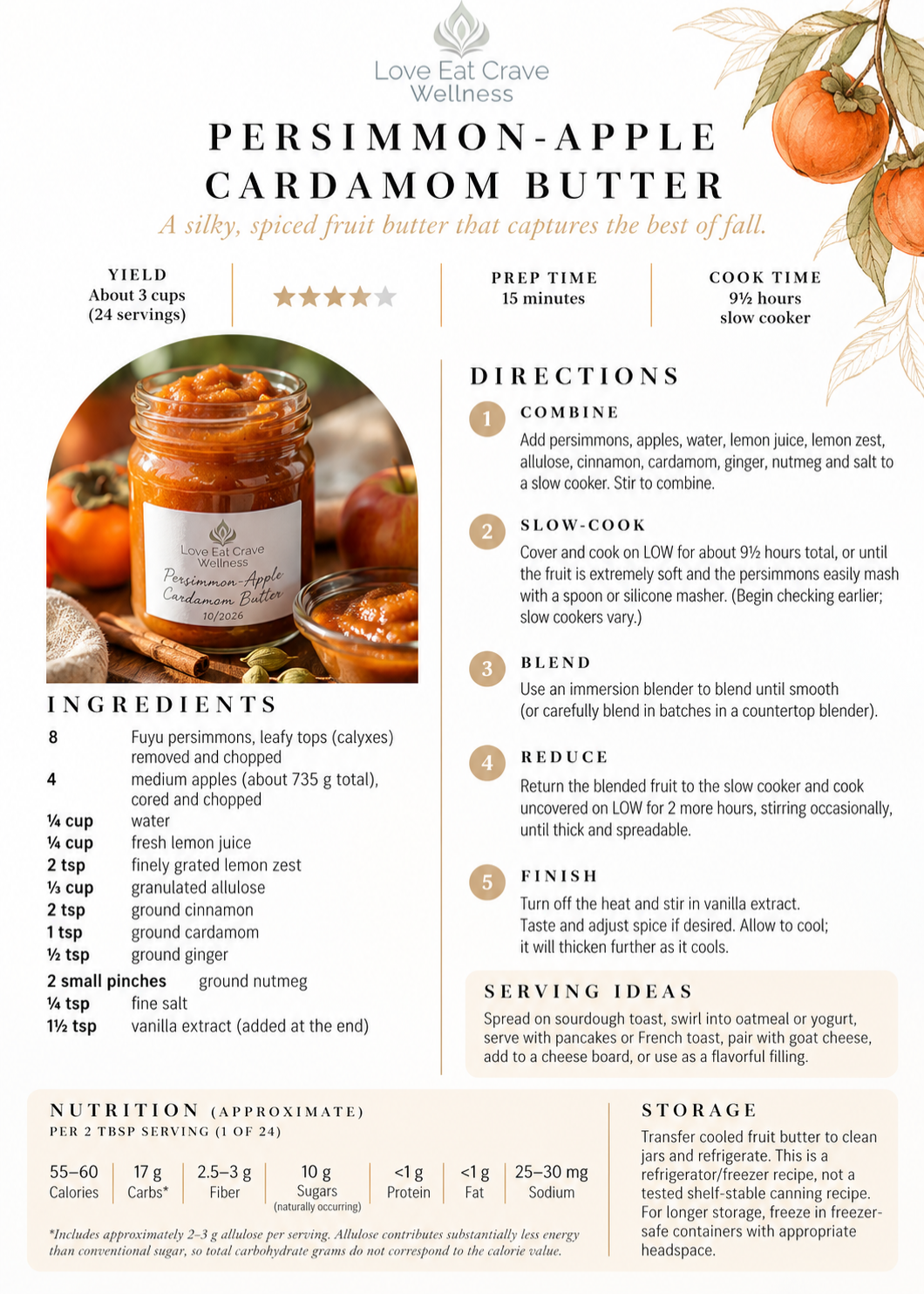
This Persimmon-Apple Cardamom Butter combines the natural sweetness of ripe persimmons and apples with warm spices, creating a smooth, fragrant spread that captures the flavors of fall.
Slow cooking allows the fruit to soften and the flavors to develop, while cinnamon, cardamom, ginger, and nutmeg bring warmth and depth.
Spread it on toast, swirl it into oatmeal or yogurt, or explore other ways to make it your own.
And while this recipe is certainly about enjoying something delicious, it's also an opportunity to get curious about the ingredients themselves.
What do persimmons contribute nutritionally? How does the fiber in fruit fit into our everyday eating patterns? And what might we consider when choosing ingredients or adapting a recipe to our individual needs?
We'll explore those questions in Beyond the Recipe, where food becomes an opportunity to learn.
THE RECIPE
BEYOND THE RECIPEA Closer Look at What's in the Jar
Persimmon–Apple Cardamom Butter
There's more to this recipe than its warm spices and naturally sweet flavor.
Persimmons, apples, lemon, and aromatic spices bring different nutrients and plant compounds to the table. Understanding a little about what they contribute can help us appreciate our ingredients and make more informed choices about how we use them.
NUTRIENT HIGHLIGHTSFiber · Provitamin A Carotenoids · Vitamin C · Potassium · Polyphenols
What These Nutrients Do
Fiber
Persimmons and apples contribute dietary fiber, which supports digestive function and helps promote a feeling of fullness. Fiber can also influence how quickly carbohydrates are absorbed, although the overall effect depends on the food, portion size, and what it's eaten with.
Provitamin A Carotenoids
Persimmons contain carotenoids, including compounds the body can convert into vitamin A. Vitamin A plays important roles in vision, immune function, and maintaining healthy skin and other tissues.
Vitamin C
Persimmons and lemon juice contribute vitamin C, which supports normal immune function, collagen formation, and the absorption of iron from plant foods. Vitamin C also acts as an antioxidant, helping protect cells from oxidative damage.
Potassium
Fruit naturally contains potassium, a mineral involved in fluid balance, nerve signaling, and normal muscle function. Potassium is one of several nutrients that help the body carry out essential everyday processes.
Polyphenols
Persimmons, apples, and spices contain a variety of plant compounds known as polyphenols. These compounds are being studied for their potential roles in human health, including their antioxidant activity. Their effects depend on the specific compounds, amounts consumed, and broader eating patterns.
These highlights describe nutrients and plant compounds found in the ingredients. The amounts present in an individual serving may vary, and not every nutrient is necessarily present in a significant quantity.
MAKING IT YOUR OWNOne Recipe. Different Needs. Plenty of Possibilities.
Recipes are starting points, not rigid instructions.
The ingredients, portions, and ways we serve food can all be adjusted to reflect our preferences, nutritional needs, and everyday circumstances.
This Persimmon–Apple Cardamom Butter is one example of how a recipe can invite experimentation. You might adjust the spices, explore different ways to serve it, or consider how it fits alongside other foods in a meal.
For someone paying attention to carbohydrate intake, for example, understanding the naturally occurring sugars in fruit, the amount of added sweetener, and the portion being served can provide useful context. Pairing a fruit spread with other foods may also influence how it fits into a meal.
There isn't one approach that works for everyone. What matters is having enough information to make choices that reflect your own needs, preferences, and circumstances.
The goal isn't to make every recipe perfect. It's to make informed choices that work for you.
CONTINUE EXPLORINGCuriosity Doesn't Have to End With One Recipe.
Every recipe offers an opportunity to discover something new—whether it's an unfamiliar ingredient, a different preparation method, or a better understanding of how food fits into everyday life.
The Love Eat Crave Wellness Recipe Hub is a place to keep exploring, experimenting, and learning at your own pace.
You don't need to change everything about the way you eat to become more curious about what's on your plate.
