
Sometimes a recipe starts with a simple idea and becomes something you find yourself reaching for again and again.
My exploration of homemade syrups began with lattes. I wanted to create something flavorful and versatile using allulose, a sweetener that, in my family's experience, has had little noticeable effect on blood glucose.
What began as a way to flavor coffee soon found its way into other parts of my kitchen. I started experimenting with syrups in cooking and baking, drizzling them over breakfast favorites, and even adding them to cottage cheese.
I especially enjoy incorporating seasonal flavors into everyday foods, and homemade syrups offer an easy way to do that.
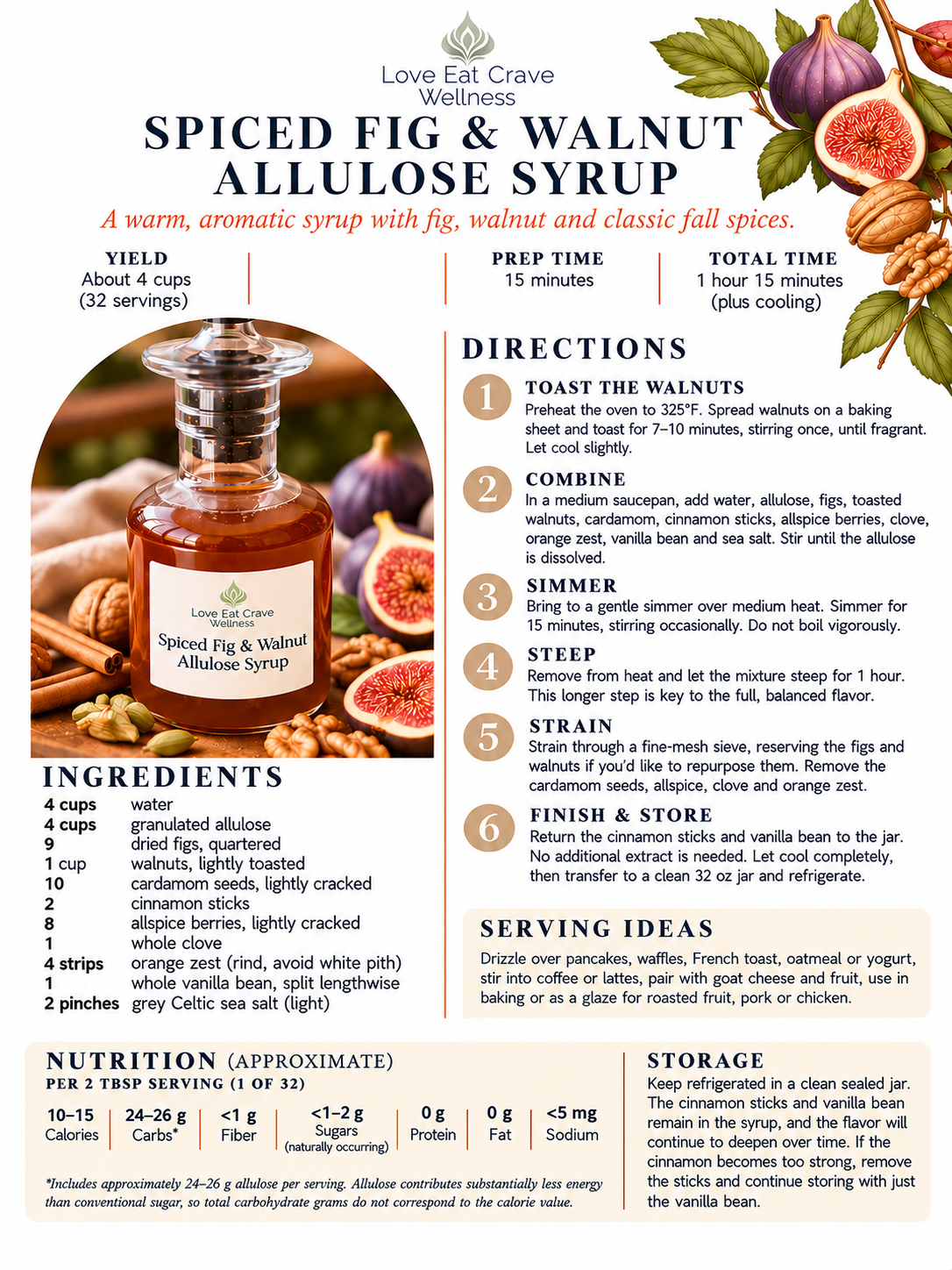
This Spiced Fig & Walnut Allulose Syrup brings together the rich flavor of dried figs, toasted walnuts, fragrant cardamom, cinnamon, allspice, orange zest, and vanilla. The ingredients gently simmer before steeping together, creating a syrup that's warmly spiced, subtly nutty, and full of fall-inspired flavor.
One of the things I appreciate most about allulose is its relatively neutral taste. I haven't experienced the lingering aftertaste I notice with some other sugar alternatives, which allows the flavors of the figs, spices, and vanilla to take center stage.
And while I originally started making syrups for lattes, this one has become a favorite well beyond the coffee cup. It's delicious on pancakes and waffles, stirred into oatmeal, drizzled over cottage cheese, or incorporated into cooking and baking.
It's a small example of how one ingredient—or one simple kitchen experiment—can open the door to so many possibilities.
There's more to explore here than the flavors alone. How does allulose differ from conventional sugar? What happens when figs, walnuts, and whole spices are infused into a syrup and then strained out? And how might understanding those ingredients help us make a recipe our own?
We'll explore these questions in Beyond the Recipe, where food becomes an opportunity to learn.
THE RECIPE
BEYOND THE RECIPEA Closer Look at What's in the Syrup
Spiced Fig & Walnut Allulose Syrup
There's more to this syrup than its warm spices and rich, fig-forward flavor.
Dried figs, toasted walnuts, whole spices, orange zest, and vanilla each contribute something to the finished recipe. Some ingredients bring sweetness, others add aroma or depth, and together they create a flavor that develops through gentle heating and steeping.
But this recipe also introduces an interesting nutritional distinction.
Unlike a recipe where all the ingredients remain in the finished dish, this syrup is strained. The figs, walnuts, and whole spices help build its flavor, but much of their fiber, fat, protein, and other nutrients remain in the ingredients that are removed.
Allulose adds another layer to the conversation. Although it is classified as a carbohydrate, it is metabolized differently from conventional sugar and contributes substantially fewer calories.
Understanding these differences can help us appreciate not only what goes into a recipe, but also what remains in the food we actually consume.
What Makes This Syrup Different?
Allulose: A Different Kind of Sugar
Allulose is a naturally occurring rare sugar found in small amounts in foods such as figs and raisins. It has a chemical structure similar to fructose but is processed differently by the body.
Unlike conventional sugar, most consumed allulose is absorbed but not metabolized for energy in the same way. As a result, it contributes approximately 0.4 calories per gram, compared with about 4 calories per gram for conventional sugar.
Allulose also tends to produce a much smaller blood glucose response than conventional sugar, although individual responses and the overall composition of a meal still matter.
In the kitchen, allulose provides sweetness without the lingering aftertaste some people experience with other alternative sweeteners. It also dissolves readily, making it useful for syrups, beverages, and other recipes where a smooth texture is desirable.
Dried Figs: Flavor Beyond Sweetness
Dried figs contain naturally occurring sugars, dietary fiber, potassium, and various plant compounds.
In this recipe, however, the figs are used primarily to infuse the syrup with flavor.
As the figs simmer and steep, some water-soluble compounds, including sugars, can move into the surrounding liquid. Much of the fiber and other components remain in the fruit itself and are removed during straining.
This distinction matters when considering the nutritional contribution of the finished syrup.
Toasted Walnuts: Building Flavor Through Heat
Walnuts are a source of unsaturated fats, including alpha-linolenic acid (ALA), a plant-based omega-3 fatty acid. They also contain protein, fiber, and minerals.
But in this recipe, their primary role is culinary.
Toasting encourages chemical reactions that develop aroma and deepen flavor, creating the warm, nutty character that complements the figs and spices.
Because the walnuts are strained out, the finished syrup should not be considered a meaningful source of the nutrients found in whole walnuts.
Whole Spices, Orange Zest & Vanilla: The Art of Infusion
Cardamom, cinnamon, allspice, clove, orange zest, and vanilla contain aromatic compounds that contribute distinctive flavors and fragrances.
Gentle heating helps release some of these compounds into the syrup, while steeping allows the flavors to develop further.
The result is a layered flavor profile without needing large quantities of ground spices or additional extracts.
Although spices and citrus zest contain various plant compounds, the amounts transferred into an individual serving of strained syrup are difficult to quantify.
Their most noticeable contribution here is flavor.
Understanding the Nutrition Numbers
Why Carbohydrates and Calories Don't Always Tell the Same Story
If you look at the nutrition information for this syrup, you might notice something surprising: a 2-tablespoon serving contains approximately 24–26 grams of carbohydrate but is estimated to provide only 10–15 calories.
How can both numbers be true?
The answer lies primarily in allulose.
Conventional sugars provide approximately 4 calories per gram. Allulose, however, provides approximately 0.4 calories per gram because the body metabolizes it differently.
That means the grams of carbohydrate listed for a food containing allulose don't necessarily correspond to the calorie value we would calculate using conventional sugar.
What About Blood Glucose?
Allulose generally produces a much smaller blood glucose response than conventional sugar.
This is one reason it has attracted interest as an alternative sweetener, particularly among people who pay attention to their carbohydrate intake or blood glucose patterns.
However, it's important to distinguish between the effects of allulose itself and the effects of an entire recipe or meal.
This syrup also contains ingredients such as dried figs, which can contribute small amounts of naturally occurring sugars to the finished liquid. Individual responses may vary, and portion size and the foods served alongside the syrup provide additional context.
Why the Nutrition Information Is an Estimate
Calculating nutrition for an infused syrup is different from calculating nutrition for a recipe in which every ingredient is consumed.
The figs, walnuts, spices, and orange zest contribute flavor during cooking and steeping, but most of their physical components are removed before serving.
Some soluble compounds may remain in the syrup, while others stay in the strained ingredients.
Without laboratory analysis, it's difficult to determine precisely how much of each nutrient transfers into the finished liquid.
For that reason, the nutrition information provided with this recipe is an estimate rather than an exact measurement.
The Takeaway
Nutrition labels offer useful information, but understanding the ingredients and how a recipe is prepared can provide valuable context.
In this case, the carbohydrate number alone doesn't tell the complete story about the syrup's calorie contribution or its potential effect on blood glucose.
MAKING IT YOUR OWNOne Syrup. Different Uses. Plenty of Possibilities.
Recipes are starting points, not rigid instructions.
One of the things I enjoy most about homemade syrups is how easily they can become part of everyday cooking. What begins as a flavor for a latte might find its way into breakfast, baking, or a savory dish.
This Spiced Fig & Walnut Allulose Syrup offers plenty of opportunities to experiment.
Try stirring it into coffee or a latte, drizzling it over pancakes, waffles, oatmeal, or yogurt, or adding a little to cottage cheese. It can also bring warmth and sweetness to baked goods or serve as a flavorful glaze for roasted fruit or savory dishes.
You might also experiment with the balance of spices. A little more cardamom could bring a brighter, more aromatic character, while adjusting the cinnamon or orange zest can shift the flavor in another direction.
Making the Most of the Figs and Walnuts
The ingredients used to infuse this syrup can offer opportunities for a little more kitchen creativity.
Give the Walnuts Another Life
After straining, spread the walnuts on parchment and return them to a 300°F oven for approximately 10–15 minutes, stirring once halfway through. Allow them to cool completely.
This second roasting helps dry the walnuts and develop their toasted flavor again.
Try incorporating them into oatmeal, yogurt, fall salads, baked oatmeal, or a fruit crumble. If you're uncertain whether they're thoroughly dried, refrigerate or freeze them for storage.
Save Those Figs, Too
The figs have already spent time simmering and steeping with warm spices, orange zest, and vanilla, giving them a wonderfully different flavor profile.
Rather than discarding them, I like to freeze them for another day.
They could be incorporated into baked goods, blended into a fruit spread, added to oatmeal, or used as a flavorful addition to a future kitchen experiment.
Allow the figs to cool, transfer them to a freezer-safe container, and freeze them until you're ready to use them.
A Little Kitchen Curiosity
Repurposing ingredients isn't necessarily about making sure nothing ever goes to waste. It's also another opportunity to experiment with flavors, textures, and possibilities.
Sometimes the ingredients left behind after making one recipe can become the starting point for something entirely new.
A Note About Individual Needs
Allulose is one option among many sweeteners, and it may not be the right choice for everyone. Preferences, digestive tolerance, availability, and individual nutrition considerations can all influence which ingredients work best.
Some people may also experience digestive discomfort when consuming larger amounts of allulose.
The goal isn't to make every recipe fit one particular way of eating. It's to understand the ingredients well enough to make choices that suit your preferences and circumstances.
The possibilities begin with understanding your ingredients—and discovering what works for you.
CONTINUE EXPLORINGCuriosity Doesn't Have to End With One Recipe.
A homemade syrup can begin with a handful of ingredients and lead to all kinds of possibilities.
Maybe it's experimenting with a different combination of spices, discovering a new way to use seasonal fruit, or finding another place for a familiar flavor in your everyday cooking.
The Love Eat Crave Wellness Recipe Hub is a place to keep exploring those possibilities, learning about ingredients, and finding inspiration for whatever you're curious to try next.
There's no single way to approach a recipe. Sometimes the most interesting discoveries happen when you make it your own.
