
There's something especially inviting about French toast on a slow morning.
The warm aroma of cinnamon and vanilla, the golden edges of the bread, and the pleasure of sitting down to a breakfast that feels a little special—even when it's made with familiar ingredients.
I've always enjoyed finding ways to bring a little more nourishment into the foods I already love, without losing the qualities that make them enjoyable in the first place.
That's what inspired this High-Protein Sourdough French Toast.
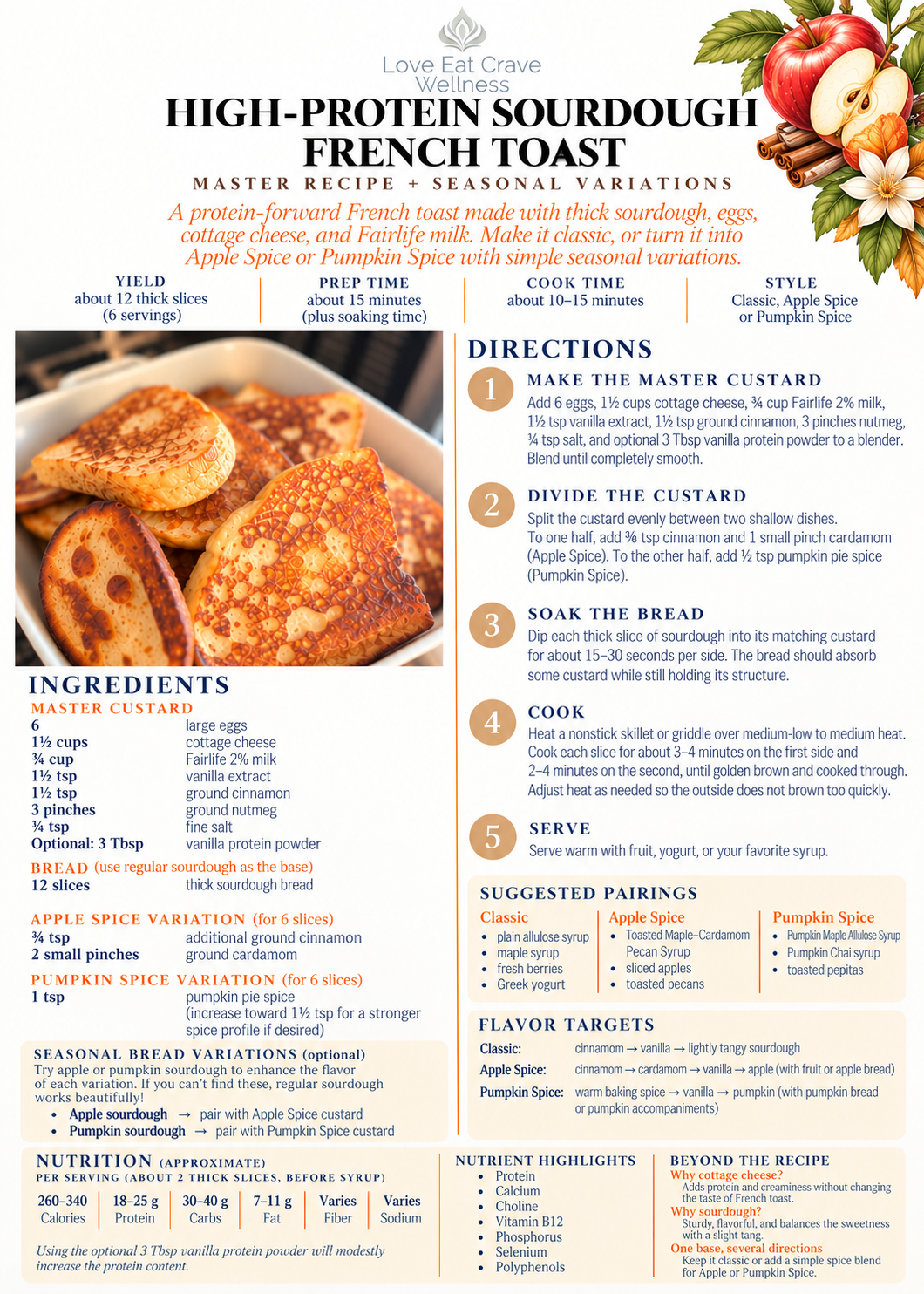
Rather than relying entirely on a traditional egg-and-milk custard, I blend eggs, cottage cheese, and Fairlife milk into a smooth mixture that brings additional protein and a lovely creamy texture to the finished toast.
The cottage cheese disappears into the custard once blended, and thick slices of sourdough provide a sturdy foundation with just enough tang to balance the vanilla and warm spices.
But what makes this recipe especially fun is how easily it can move in different directions.
The master custard is delicious as written, with cinnamon, vanilla, and a gentle hint of nutmeg.
From there, a little extra cinnamon and cardamom create an Apple Spice variation, while pumpkin pie spice introduces a different kind of seasonal warmth.
You can make an entire batch in one flavor, or divide the custard and prepare both variations at once.
And you don't need specialty bread to enjoy either version. Regular sourdough works beautifully, while apple or pumpkin sourdough can add another layer of flavor when you happen to have it available.
I particularly enjoy the idea of pairing the Pumpkin Spice version with my Pumpkin Maple Allulose Syrup. It's a lovely example of how one recipe can become the inspiration for another.
What appeals to me most, though, is the flexibility.
Some mornings call for classic cinnamon and vanilla. Others invite a little experimentation with seasonal spices, fruit, or a favorite homemade syrup.
And sometimes it's nice to prepare a batch ahead of time so that a comforting breakfast is waiting in the freezer.
For me, that's the kind of everyday nourishment worth making room for: familiar food, thoughtfully prepared, with plenty of opportunity to make it your own.
THE RECIPE
BEYOND THE RECIPEA Little Curiosity About Protein, Texture, and the Perfect French Toast
One of the things I enjoy about revisiting a familiar recipe is discovering how a small change in ingredients or technique can create an entirely different experience.
French toast is a wonderful example.
At its heart, it's a simple combination of bread and custard. But the type of bread, the ingredients in the custard, and even how long each slice soaks can influence the finished texture.
This High-Protein Sourdough French Toast brings a few of those details together.
Blended cottage cheese creates a different kind of custard. Cottage cheese contributes protein and creaminess, but its texture changes when blended with eggs and milk. Once smooth, it becomes part of the custard rather than remaining in recognizable curds. This is one of my favorite ways to explore how an ingredient can play a different role depending on how it's prepared.
Eggs do more than contribute protein. Eggs also help the custard set as the French toast cooks. Their proteins change structure with heat, helping transform the liquid mixture into a tender interior. Cooking over medium-low to medium heat gives the center time to set before the outside becomes too dark.
Sourdough brings structure and flavor. Thick slices of sourdough hold up well to the custard and contribute a slightly tangy flavor that balances the cinnamon and vanilla. The bread should absorb enough liquid to become tender inside without losing its structure.
Soaking time makes a difference. The recipe calls for approximately 15–30 seconds per side. That's enough time for thick sourdough to take in some custard while still holding together. The ideal time may vary depending on the thickness and texture of your bread, so it's worth paying attention to how each slice feels.
One custard can become several recipes. The master mixture begins with cinnamon, vanilla, and a little nutmeg. Additional cinnamon and cardamom create the Apple Spice variation, while pumpkin pie spice offers a different direction. You can flavor the entire batch or divide the custard and prepare two versions at once.
The protein comes from familiar foods. Eggs, cottage cheese, milk, and sourdough all contribute to the recipe's protein content. The optional vanilla protein powder can add a little more, but it isn't necessary to make the recipe work.
The nutritional estimates will vary depending on the bread, cottage cheese, milk, and whether the optional protein powder is included. Toppings and syrups will also change the final values.
What interests me most isn't simply the amount of protein in a serving.
It's the way these ingredients can contribute nourishment while still creating the flavor and texture we expect from a comforting breakfast.
And there's another lesson here that extends beyond French toast: a recipe doesn't always need an entirely new set of ingredients to become something different.
Sometimes a familiar foundation, paired with a little curiosity, is all you need.
A question to take into your own kitchen: When you make a favorite recipe, which small detail—an ingredient, a technique, or a flavor variation—might be worth experimenting with next?
MAKING IT YOUR OWNOne Delicious Foundation, Several Possibilities
One of the things I appreciate about a good foundational recipe is how much room it leaves for personal preference.
This High-Protein Sourdough French Toast begins with a creamy cinnamon-vanilla custard and thick slices of sourdough. From there, you can keep things classic, introduce seasonal spices, or prepare two different flavors from the same batch.
There's no need to make the recipe more complicated than you want it to be.
Keep it classic. The master custard already includes cinnamon, vanilla, and a little nutmeg. Serve the finished French toast with fresh berries, Greek yogurt, or your favorite syrup. Sometimes the simplest version is exactly what sounds good.
Explore Apple Spice. For a full batch, add ¾ teaspoon additional cinnamon and two small pinches of ground cardamom to the master custard. The cardamom contributes a fragrant note that pairs beautifully with sliced apples and toasted pecans. If you happen to have apple sourdough, it can add another layer of flavor, but regular sourdough works just as well.
Try Pumpkin Spice. Add one teaspoon pumpkin pie spice to the full batch of custard, increasing gradually toward 1½ teaspoons if you prefer a stronger spice profile. Pair it with toasted pepitas or a drizzle of Pumpkin Maple Allulose Syrup. Pumpkin sourdough is another option, but it isn't necessary.
Make two flavors at once. Divide the finished master custard evenly between two shallow dishes. To one half, add ⅜ teaspoon additional cinnamon and one small pinch of cardamom. To the other, add ½ teaspoon pumpkin pie spice, increasing toward ¾ teaspoon if desired. It's a simple way to offer a little variety without preparing two separate custards.
Pay attention to your bread. Thick sourdough slices provide structure, but breads vary in density and moisture. Begin with the suggested 15–30-second soak per side, adjusting within that range according to how quickly your bread absorbs the custard. You want the slices to become tender without falling apart.
Make breakfast easier another day. This French toast is also a useful recipe for preparing ahead. Allow cooked slices to cool completely, freeze them individually, and then transfer them to an airtight freezer container or bag. Reheat until warmed through when you're ready to enjoy them.
Let the toppings change with the season. Fresh berries might be lovely in warmer months, while apples, pears, toasted nuts, or a homemade seasonal syrup can bring a different character to the same French toast.
What I enjoy most about this recipe is that the variations aren't separate projects.
They're simply different ways of enjoying something you've already learned to make.
And that kind of flexibility can make everyday cooking feel both easier and more creative.
Sometimes one reliable recipe is all you need to open the door to several new possibilities.
CONTINUE EXPLORINGA Little More Inspiration for the Breakfast Table
One of the things I love about a recipe like this French toast is how easily it becomes the starting point for something different.
The cinnamon-vanilla custard is lovely on its own, but changing what you serve alongside it can create an entirely new combination of flavors.
If you're curious about exploring a little further, here are three recipes from the LECW kitchen that pair beautifully with this one.
Pumpkin Maple Allulose Syrup — A pumpkin-forward syrup layered with maple, vanilla, cinnamon, cardamom, ginger, and a touch of allspice. An especially inviting companion to the Pumpkin Spice French toast variation.
Pear–Fig Cardamom Compote — Tender pears and rich figs slow-cooked with cardamom, vanilla, ginger, and citrus. Its gently tart finish offers a lovely contrast to the warm, creamy French toast.
Persimmon–Apple Cardamom Butter — A softly spiced fruit butter made with ripe persimmons, apples, and fragrant aromatics. Try spreading a little over warm French toast for another way to enjoy seasonal fruit.
Each pairing brings something different to the table, and none requires you to change the French toast itself.
Sometimes discovering a new favorite breakfast is as simple as combining two recipes you already enjoy.
