
There’s something about a salad filled with crisp apples, tender greens, tart dried fruit, and toasted nuts that feels especially inviting as the seasons begin to change.
I love the contrast of textures and flavors—the freshness of the greens, the crunch of the apple, the little bursts of tart fruit, and, when I’m in the mood for them, the creamy richness of goat cheese or feta.
But for me, the dressing is what brings everything together.
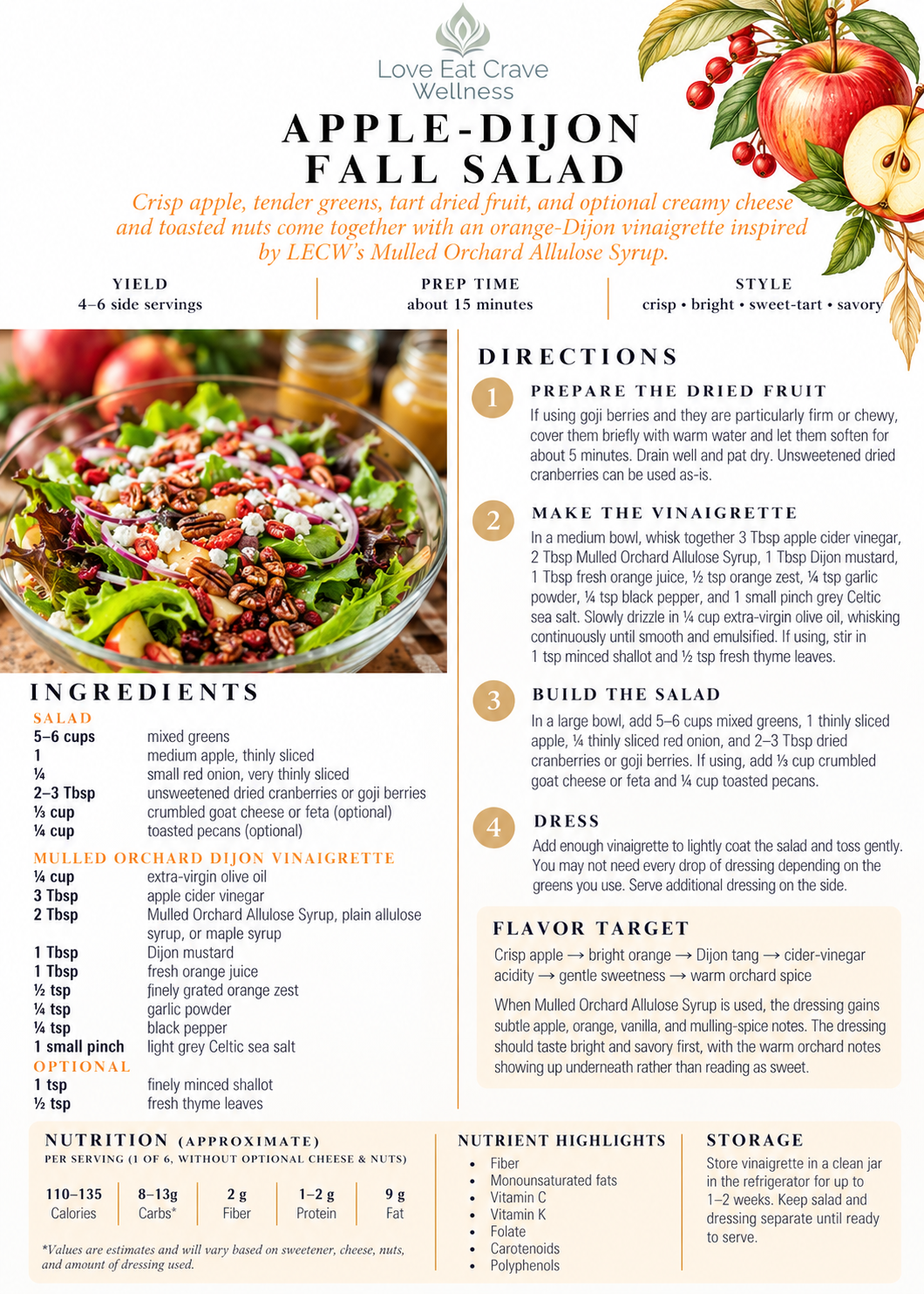
This Apple-Dijon Fall Salad grew naturally out of my experiments with Mulled Orchard Allulose Syrup. After discovering how beautifully those apple, orange, vanilla, and mulling-spice notes worked in a savory Dijon vinaigrette, I started thinking about the ingredients that might complement them.
Crisp apples felt like an obvious place to begin. Mixed greens brought freshness, red onion added a little sharpness, and dried cranberries or goji berries introduced a sweet-tart contrast. Toasted pecans and creamy cheese became optional finishing touches.
The result is a salad that feels both fresh and seasonal, with a dressing that is bright and savory first, followed by a gentle hint of orchard warmth.
And while I love making it with my Mulled Orchard Syrup, you don't need to have that recipe waiting in your refrigerator. Plain allulose syrup or maple syrup works beautifully, too, each bringing a slightly different character to the dressing.
That's something I want to encourage more often in the LECW kitchen: recipes that inspire exploration without creating extra obligations.
Sometimes a beautiful seasonal dish begins with what you already have.
THE RECIPE
BEYOND THE RECIPEA Little Curiosity About Building a Better Salad
One of the things I enjoy about a salad like this is that the ingredients are simple, but the experience is anything but.
There's crispness from the apple, freshness from the greens, a little sharpness from the red onion, and bursts of sweet-tart flavor from the dried fruit. Add creamy cheese or toasted pecans, and you introduce even more contrast.
What makes it interesting isn't any one ingredient. It's the way the different flavors and textures come together.
A salad is really a balance of contrasts.
Think about the structure of this one: tender greens, crisp fruit, tart dried fruit, a sharp aromatic, and a bright dressing. Creaminess and crunch are optional additions that can make the combination feel even more layered.
Once you begin noticing those roles, it becomes easier to experiment with what you already have.
Apples bring more than crunch. Along with their fresh flavor, apples contribute fiber and naturally occurring plant compounds called polyphenols, particularly when the peel is included. Different varieties also bring different levels of sweetness and tartness, which can subtly change the character of the salad.
Dried cranberries and goji berries offer two different experiences. Cranberries bring a familiar tart fruit note, while goji berries have their own sweet-tart character and vibrant color. Both contain plant compounds, but their nutrient profiles aren't identical. If your goji berries are particularly dry, a brief soak in warm water can soften their texture.
Mixed greens create the foundation. Depending on the varieties you choose, leafy greens can contribute nutrients such as vitamin K, folate, and carotenoids. They also bring different flavors and textures. Tender baby greens feel quite different from peppery arugula or heartier baby kale.
The dressing ties the contrasts together. Dijon mustard contributes tang and helps the olive oil and vinegar form a more cohesive mixture. The apple cider vinegar and orange bring brightness, while a small amount of syrup rounds out the sharper flavors.
And there's something else I love about this dressing: it doesn't require you to make the Mulled Orchard Allulose Syrup first.
Using that syrup adds subtle apple, orange, vanilla, and mulling-spice notes. Plain allulose syrup creates a cleaner orange-Dijon profile, while maple syrup brings its own warm character. The salad works with all three.
That flexibility is intentional. Understanding what an ingredient contributes gives us more freedom to make substitutions thoughtfully, rather than feeling that every recipe must be followed exactly.
A question to take into your own kitchen: The next time you make a salad, could you identify something crisp, something tender, something bright, and something that brings contrast? You might discover that you already have the beginnings of a beautiful combination.
MAKING IT YOUR OWNA Little Room for Seasonal Experimentation
One of my favorite things about this salad is how easily it can change with the season, the ingredients in your refrigerator, or simply what sounds good that day.
The combination of crisp fruit, tender greens, something tart, and a bright dressing gives you a starting point. From there, you can make it your own.
Try a different seasonal fruit. Crisp apples are lovely here, but thinly sliced pears would bring a softer sweetness. Persimmons could be another interesting choice when they're in season. Each fruit changes the balance just a little.
Choose the greens you enjoy. A tender spring mix creates a delicate salad, while arugula adds a peppery note. Baby spinach or finely chopped baby kale can give the salad a different texture. You can also combine varieties for more contrast.
Experiment with the dried fruit. Unsweetened dried cranberries offer a familiar tartness, while goji berries bring a slightly different sweet-tart flavor. If the goji berries are particularly chewy, soaking them briefly in warm water can help soften them.
Add creaminess or crunch—or both. Goat cheese and feta each bring their own tangy, creamy character. Toasted pecans add a rich crunch, but walnuts would be lovely, too. These additions are entirely optional; the salad doesn't depend on them.
Make the dressing work for you. Mulled Orchard Allulose Syrup adds subtle fruit and spice notes, but plain allulose syrup or maple syrup are equally workable choices. Taste the dressing before adding it to the greens. A little more vinegar can brighten it, while a touch more syrup can soften the tang.
Turn a side salad into a more substantial meal. Add roasted chicken, white beans, or another protein you enjoy. Roasted squash or sweet potatoes could also make the combination feel especially suited to cooler weather.
I think there's something satisfying about recognizing the structure of a recipe and then discovering how many different directions it can take.
You don't need every ingredient on the list, and you don't need to make every component from scratch.
Sometimes the most enjoyable version is the one that makes good use of what's already in your kitchen.
CONTINUE EXPLORINGFrom One Recipe to the Next
One of the things I love about experimenting in the kitchen is discovering how one idea can lead naturally to another.
This Apple-Dijon Fall Salad is part of just such a progression. It began with a homemade syrup, moved into a savory vinaigrette, and eventually found its way into a bowl of crisp apples, tender greens, and seasonal ingredients.
If you're curious about the recipes behind this salad, here are two lovely places to explore.
Mulled Orchard Dijon Vinaigrette — The bright, savory dressing that inspired this salad. Discover how Dijon mustard, apple cider vinegar, fresh orange, and a touch of orchard sweetness come together in a versatile vinaigrette that's just as lovely with roasted vegetables or other seasonal greens.
Mulled Orchard Allulose Syrup — Where the exploration began. Apple, orange, vanilla, and mulling spices create a fragrant syrup that can bring a subtle layer of warmth to both sweet and savory recipes.
And remember, you don't need to make either recipe before enjoying this salad. They're simply invitations to explore where the flavors might take you next.
